Overview
What is Stakdi?
Stakdi is a task management application to help manage ADHD paralysis. It achieves this by enabling users to break down large goals into smaller tasks, guiding them toward healthy habits, and helping them avoid the pitfalls of analysis paralysis.
Problem
Too many options with no structure can lead to chaos.
Today's productivity app market offers a slew of solutions to make people's day-to-day lives easier. However, these apps are rarely designed with those who face analysis paralysis in mind, a common struggle for many neurodivergent users.
Research
Understanding ADHD Paralysis
Also known as analysis paralysis or ADHD shutdown, ADHD paralysis happens when a person with ADHD is overwhelmed by information, emotions, or their environment (American Psychiatric Association).
Types of ADHD Paralysis: Mental Paralysis, Choice Paralysis, and Task Paralysis
Building User Archetypes
Due to the four-week timeline, this project relied heavily on secondary research to build user archetypes and deeply understand the pain points associated with analysis paralysis.
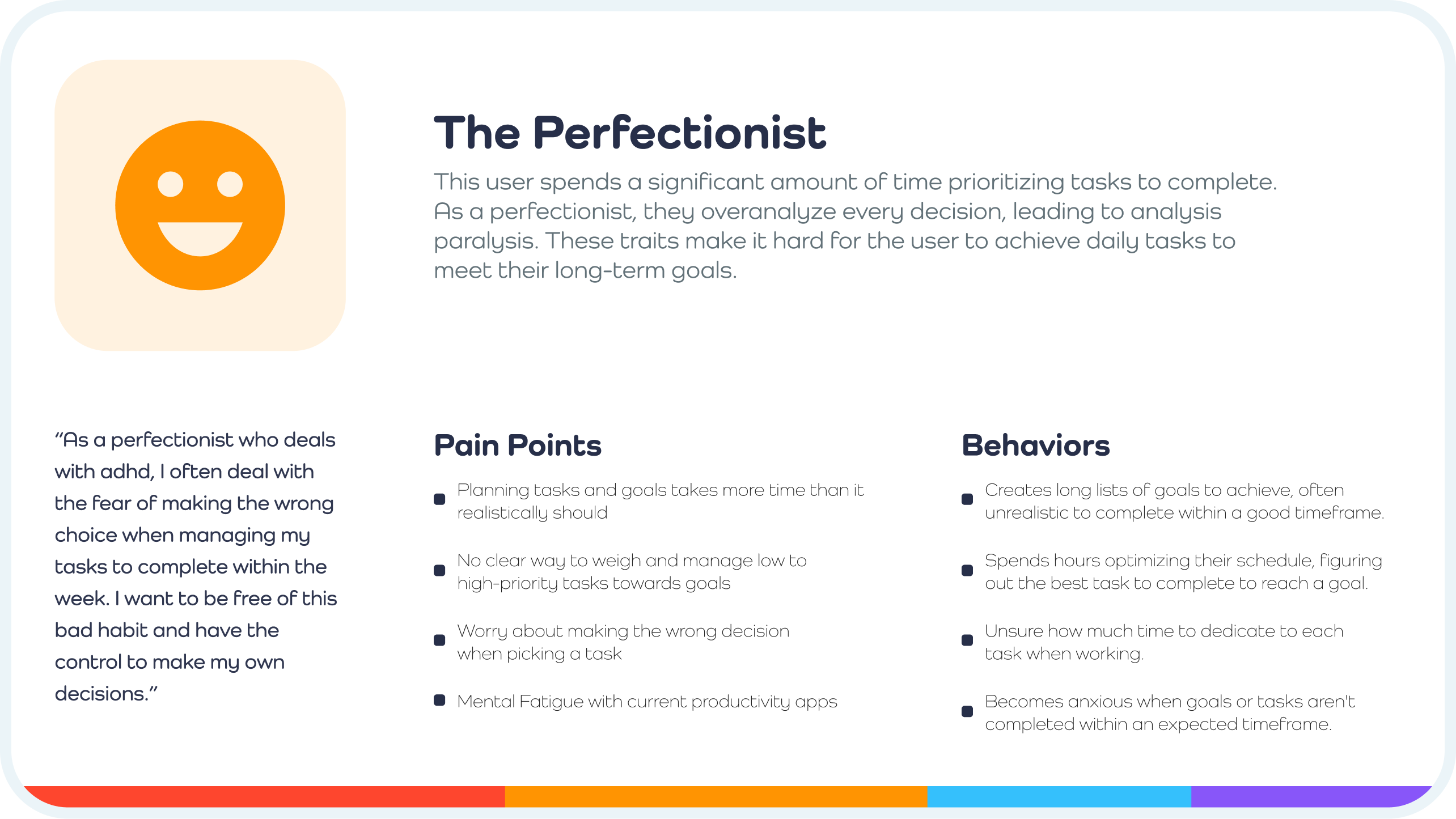

Key Insights from User Research
After completing secondary research and user archetypes I was able to get a better understanding of the three types of analysis paralysis and broke them down into three pain points:
- Users experience choice paralysis when faced with a long list of tasks, feeling overwhelmed and unable to decide where to start.
- Users struggle with mental paralysis when facing a large, multi-step goal, finding it difficult to even begin.
- Users often experience task paralysis and find it challenging to maintain focus on a single task, leading to incomplete work and frustration.
Ideation - Branding Inspiration
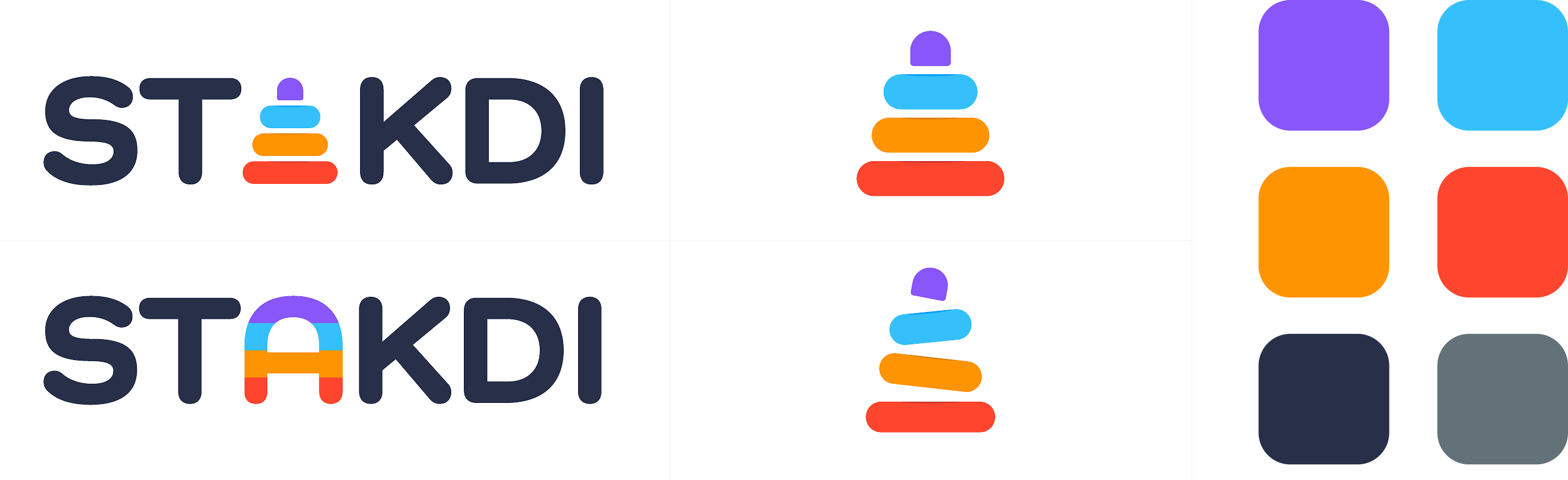
Steady + Stack = Stakdi
Stakdi's brand philosophy is inspired by the simple joy of stacking toys. Each colored loop represents a priority task, and as you stack them one by one, you're building towards a completed goal. Stakdi is about making progress tangible. The final branding consisted of colors that correlated with the app's priority feature, a logomark, and a typographic logo.

Ideation - Wireframes
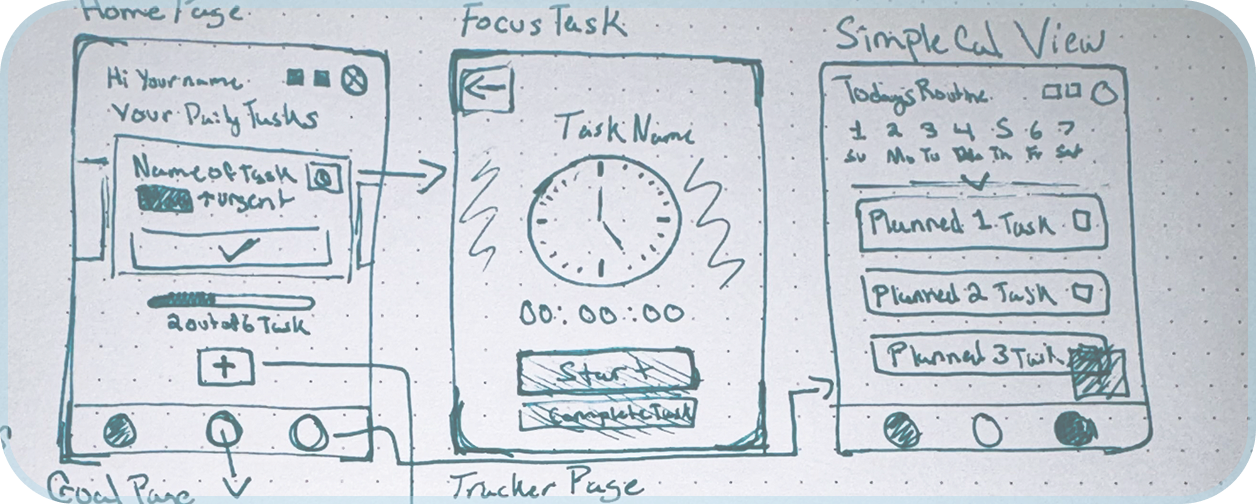
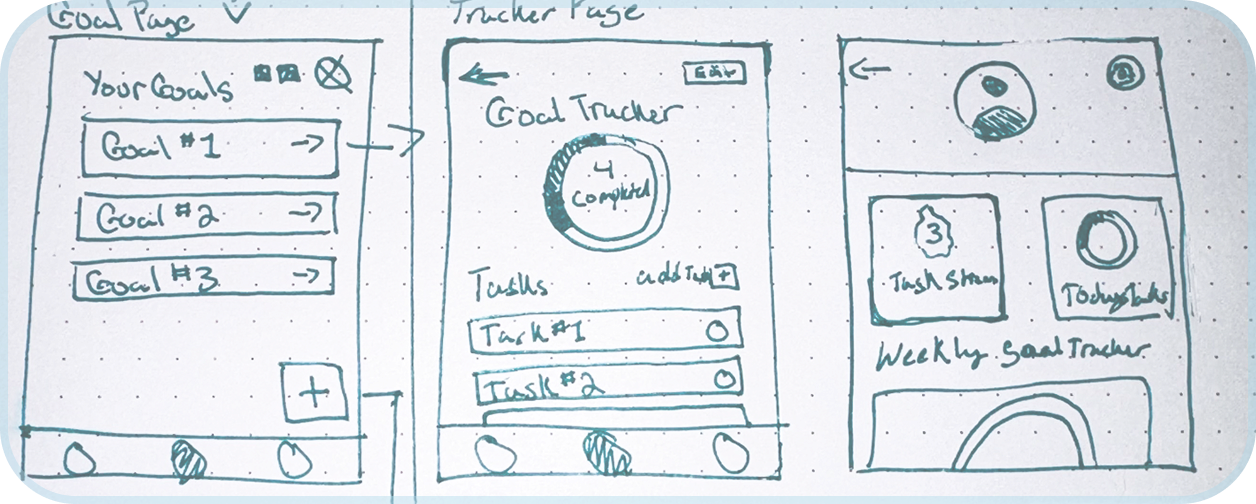
Early low-fidelity Designs Sketches
In the initial stages of the app design process, I created low-fidelity wireframe sketches of how the app would function, and presented the tasks to users. These initial pages consisted of Home, Focus Timer, Goal Journal, Goal Tracker, Profile Stats, and two module examples for task/goal creation.
Mid-fidelity Wireframes
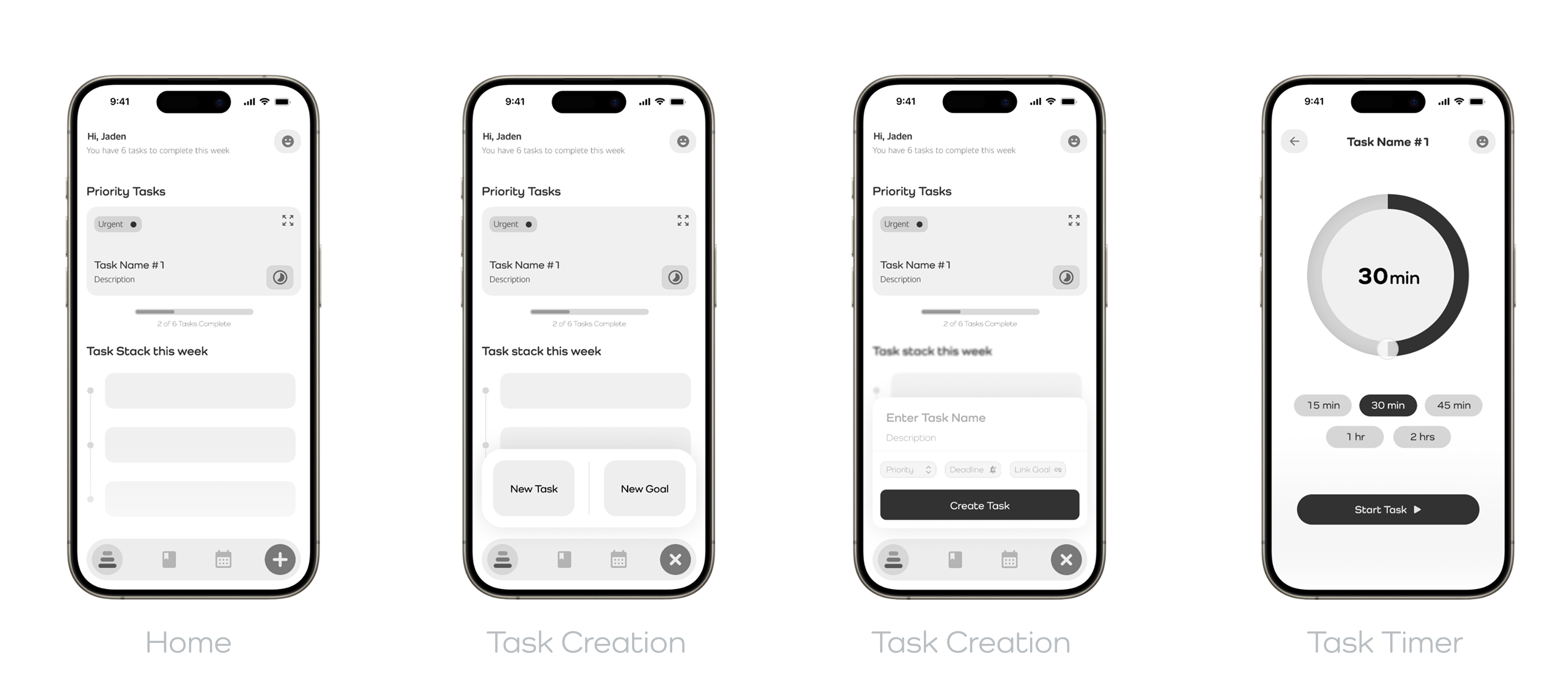
After my sketch wireframes, I further developed them into mid-fidelity designs. Throughout this process, I made several quick design iterations to further expand the original concept sketches into what could be the functional app prototype.
✨Create Your Goal & Simplify
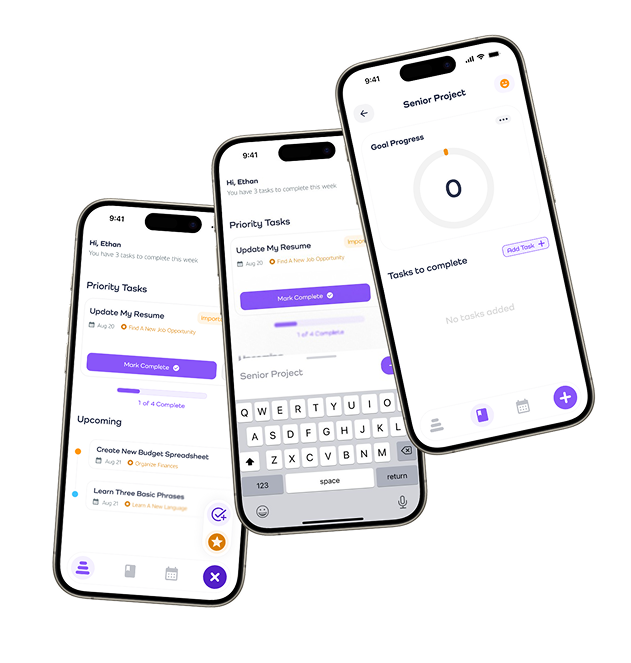
Users can create large goals and immediately break them down into smaller, actionable tasks. These tasks are sorted by priority and due date, transforming a daunting objective into a clear, structured list. (Addressing Mental Paralysis)

⚠️Priority & Upcoming Tasks
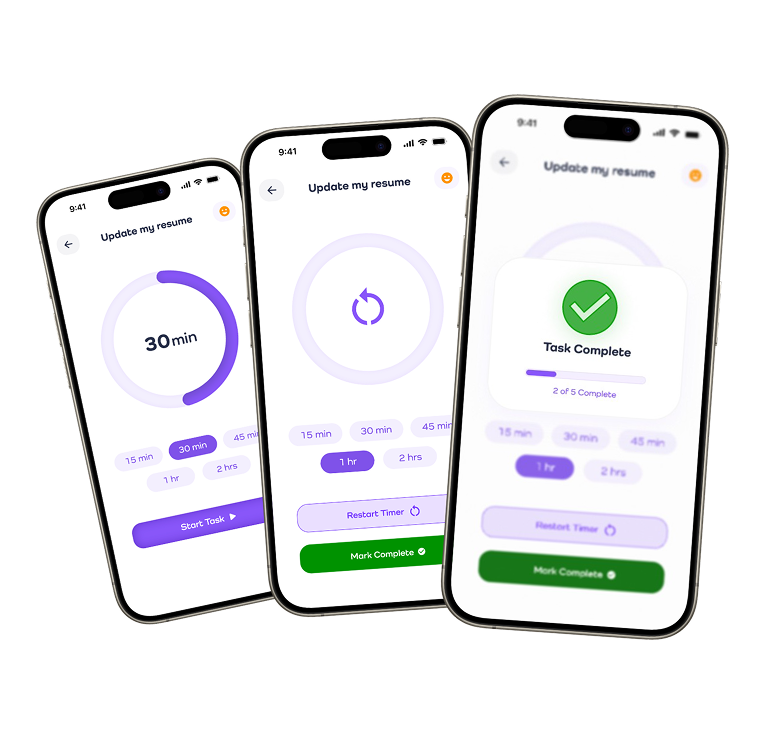
The home screen provides a clear, concise view of only the most important tasks to focus on this week, reducing the visual noise and overwhelm of a long to-do list. The "Priority Tasks" section highlights the immediate next steps. (Addressing Choice Paralysis)
⏱️Focus Tasks with Timer
Once a user selects a task, they are taken to a dedicated Focus screen that allows them to set a time commitment (e.g., 30 minutes, 1 hour). This approach utilizes timeboxing to provide a clear endpoint and prevent hyperfocus from evolving into burnout. (Addressing Task Paralysis)
Reflection
Outcomes & Lessons Learned
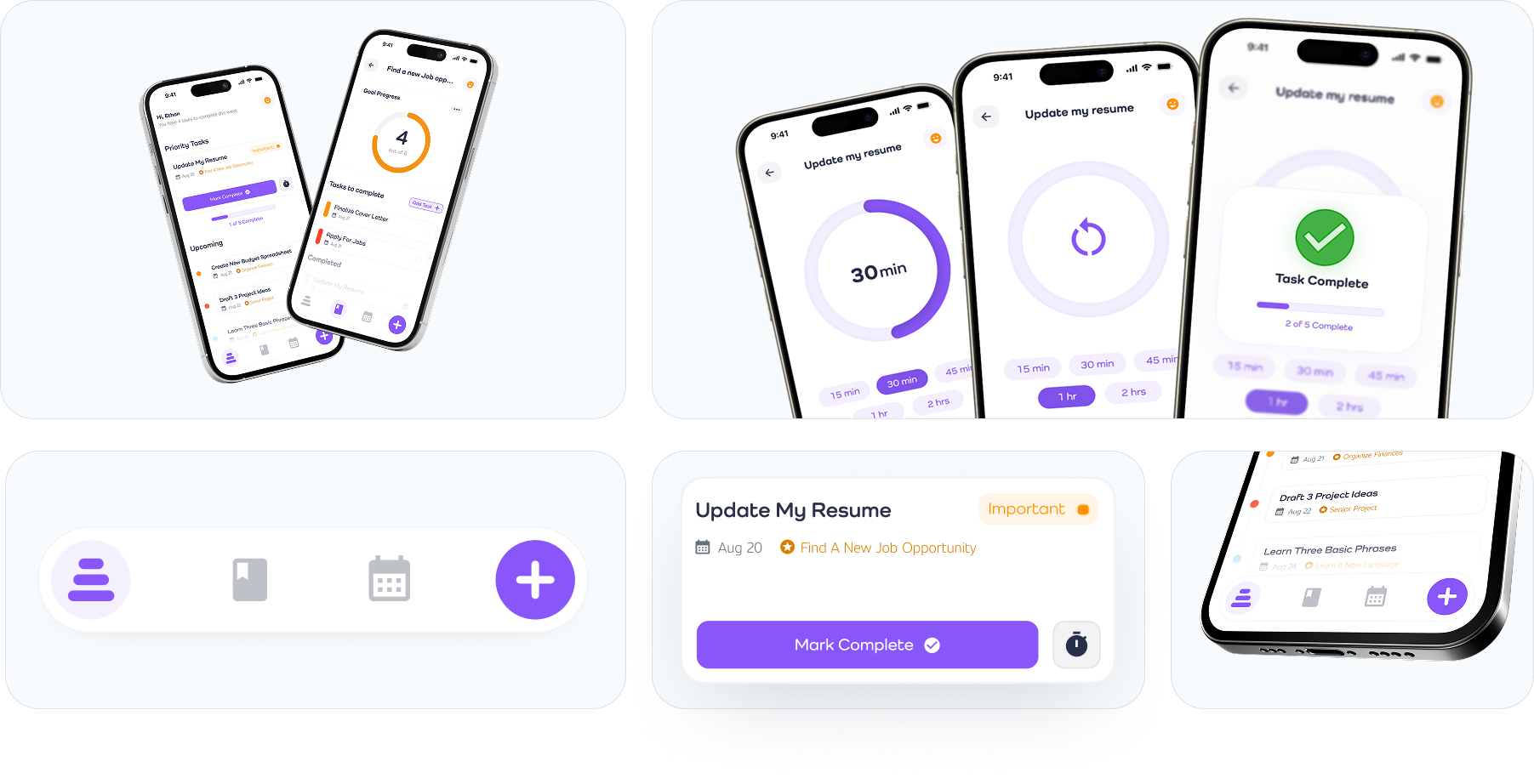
The four-week project successfully delivered a working mid-to-high fidelity prototype that implemented research-backed solutions for managing ADHD-related analysis paralysis. The core goal of translating complex goals into simple, stackable tasks was achieved in the final design.
Areas for Improvement
If given more time and resources, the next steps for Stakdi would include:
- Real User Research: Conduct interviews and usability testing with the actual target user base (neurodivergent individuals struggling with analysis paralysis) to validate the current design assumptions.
- Competitive Analysis: Perform a deep dive into existing productivity apps to identify market gaps and refine Stakdi’s unique value proposition.
- Branding and Polish: Add more micro-interactions, animations, and a cohesive branding system to enhance the user experience and make the app more engaging.